
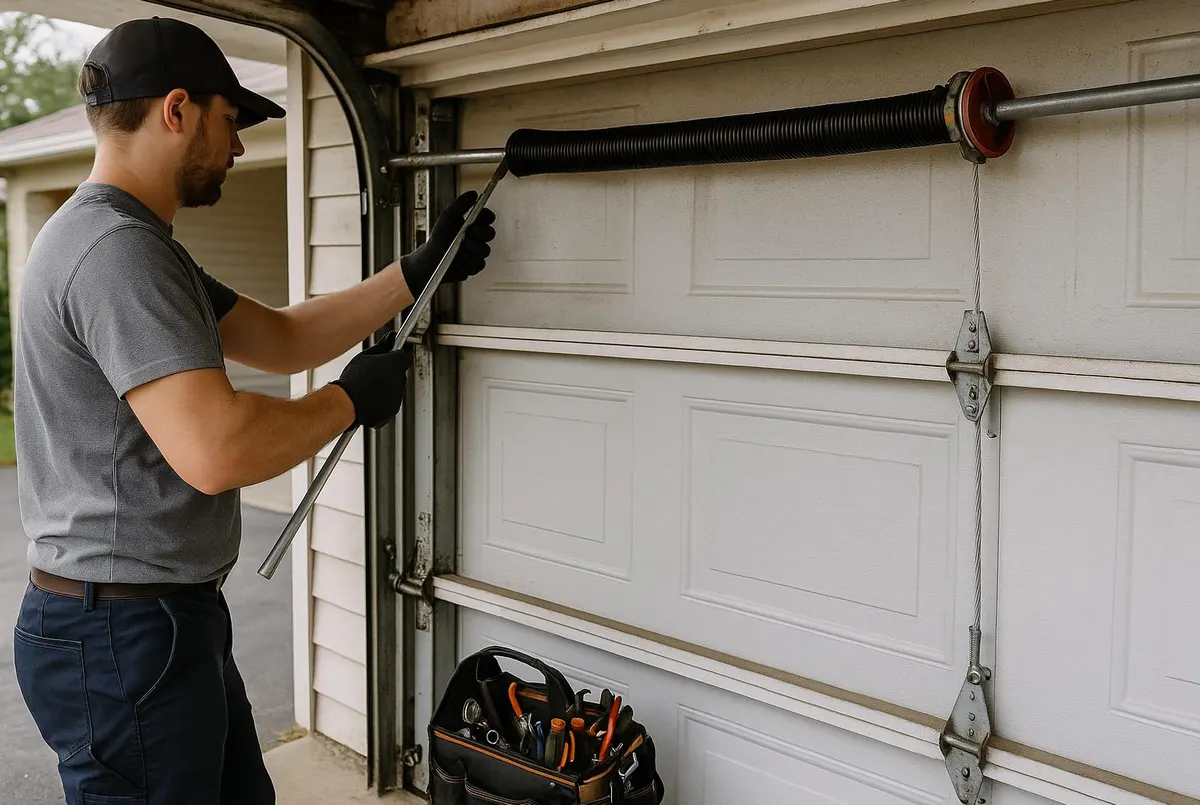
What a Technician Sees on These Calls
On a typical service call around Montverde, Clermont, and Minneola, a technician will usually find one of two things: a garage door that's never been lubricated at all, with hinges and rollers grinding dry metal on metal, or a door that's been hit with a whole can of WD-40 at some point and is now caked in a gummy, dust-caked residue that attracts dirt and grit every time it rains. Both situations shorten the life of the hardware. In this part of Florida, where humidity sits high most of the year and afternoon downpours are routine from late spring through fall, the wrong lubricant (or none at all) speeds up rust on springs and hinges and lets moisture work into places it shouldn't.
Why This Climate Makes Lubrication Non-Negotiable
Garage doors here deal with more moisture exposure than in drier climates. Humidity swells wood panels, condensation forms on metal tracks overnight, and salt-tinged air drifting inland can accelerate corrosion on hardware that isn't properly protected. A thin, even coat of the right lubricant does two jobs at once: it reduces friction on moving parts and it creates a barrier against moisture. Skip it, and you'll see rust spots on springs first, usually within a year or two, followed by squeaking hinges and rollers that stick in their tracks.
Tools and Products You'll Need
- A silicone-based garage door lubricant or a lithium grease spray labeled safe for garage door hardware
- A clean microfiber cloth or shop rag
- A soft-bristle brush (an old toothbrush works for tight spots)
- A step stool or ladder tall enough to safely reach the top of the track
- Safety glasses
Skip the household all-purpose spray lubricant and any dry graphite powder. Both are covered below under products to avoid.
Step-by-Step: How to Lubricate Your Garage Door
- Disconnect the opener and close the door manually. Pull the release cord so the door is under your control, not the opener's, before you start working near moving parts.
- Wipe down the tracks, hinges, and rollers. Use a dry cloth to remove old grease, dust, and grit. Built-up residue is often what causes sticking, not a lack of fresh lubricant layered on top of it.
- Inspect as you clean. Look for rust spots on hinges and springs, frayed cable strands, cracked rollers, or bent track sections. Note anything unusual; this is also the point where you decide if a step is a DIY task or not (see below).
- Lubricate the hinges. Apply a light spray directly to the pivot point of each hinge, where metal meets metal. Work the door up and down a few times by hand to let it work in.
- Lubricate the rollers. Spray the bearings at the center of each roller, not the roller wheel itself. Avoid getting lubricant on the track surface, which can attract dust and cause slipping.
- Lubricate the springs. Run a light coat along the length of the torsion spring. This is one of the most important steps for preventing rust, since springs take on tension daily and corrosion weakens them faster than almost any other part.
- Apply to the top of the track where the opener's chain or belt runs. A small amount keeps the drive mechanism quiet without attracting debris.
- Wipe off excess. Any lubricant left sitting on the surface will collect dust and pollen, especially during Florida's heavier pollen seasons. A light sheen is enough; dripping is too much.
- Reconnect the opener and test the door. Run it through a full open-close cycle and listen for any remaining grinding or squeaking.
Products to Avoid
- WD-40 as a long-term lubricant. It's a solvent and water-displacer, not a lubricant. It evaporates quickly and leaves parts dry again within days, while attracting more dust in the meantime.
- Dry graphite powder. It works on locks, not garage door hardware exposed to humidity. It washes away and doesn't hold up in Florida's wet conditions.
- Thick white lithium grease on tracks. Fine for hinges in small amounts, but too heavy for the track itself, where it just becomes a dust magnet.
- Cooking oils or household lubricants. They break down fast in heat and don't offer any rust protection.
What's DIY and What Needs a Technician
Cleaning, inspecting, and lubricating hinges, rollers, and the opener track are all reasonable homeowner tasks with the right products. What's not: touching the torsion spring beyond applying a surface coat of lubricant. Springs are under heavy tension and adjusting, removing, or replacing them is a job for a trained technician. The same goes for anything involving the cables, or a door that's visibly off its track. If you notice fraying cable strands, a bent track, or a spring with visible gaps or rust pitting during your inspection, stop there and call for service rather than pushing forward.
When to Call Precision Garage Door of Montverde
If lubrication doesn't quiet a squeak, if the door feels heavy or uneven when moving, or if your inspection turns up rust, fraying, or track damage, it's time to bring in a technician. Precision Garage Door of Montverde handles garage door spring repair and tune-up & maintenance visits throughout Montverde, Clermont, Minneola, Groveland, Winter Garden, Windermere, Oakland, and Ferndale, and can spot early corrosion or wear before it turns into a full breakdown during storm season.
If your garage door needs more than a fresh coat of lubricant, call Precision Garage Door of Montverde for prompt, reliable service anywhere in the Montverde, FL area.