
The Short Answer
Worn garage door springs usually give you warning before they fail completely: gaps opening up between the coils, flaking rust on the metal, a door that looks crooked when it's halfway open, an opener that strains or grinds, and a door that suddenly feels much heavier to lift by hand. Catch two or more of these and the spring is on borrowed time.
Springs don't fail out of nowhere. A torsion spring (the kind mounted horizontally above the door) or an extension spring (the kind stretched along the horizontal tracks) is rated for a certain number of open-close cycles, usually somewhere around 10,000, which works out to roughly 7 to 9 years of normal use. Humidity speeds that clock up. Lake County's wet, salt-tinged air and summer downpours promote rust, and rust pits the steel and weakens it faster than dry-climate wear. Add hurricane-season wind gusts that rack the door and stress the whole spring system, and springs here often show their age sooner than the manufacturer's estimate.
Walk Your Garage: The Spring Wear Checklist
1. Check for gaps between the coils
Stand under the spring (with the door closed and opener unplugged) and look at the coil spacing. Even, tight spacing is healthy. Noticeable gaps or coils that look stretched out of shape mean the metal has lost tension and is no longer storing energy the way it should.
2. Look for rust, flaking, or discoloration
Surface rust isn't automatically a death sentence, but flaking, pitting, or a spring that's turned dark orange-brown all over is a sign moisture has been working on it for a while. Pitted steel is weaker steel, and it's far more likely to snap under tension than slowly stretch.
3. Watch the door's balance as it opens
Disconnect the opener (pull the emergency release cord) and lift the door by hand about halfway, then let go. A door with healthy springs should stay roughly in place. A door that drifts down, slams shut, or shoots back open is unbalanced, which almost always traces back to a spring that's lost tension or a mismatched pair.
4. Listen to the opener
An opener motor that strains, grinds, hesitates, or stalls partway through a cycle is doing extra work to compensate for a spring that isn't pulling its weight. This also shortens the life of the opener itself, so a weak spring can turn into a second repair if it's ignored.
5. Test how heavy the door feels by hand
With the opener disconnected, lift the door manually. It should feel close to weightless, just a light push to get it moving. If it feels like you're hoisting real weight, the springs are no longer carrying their share of the load.
6. Inspect the cables on either side
On extension spring systems especially, check the cables for fraying, kinks, or visible slack. Cables and springs work as a system; a cable that's stretched or frayed often signals the spring on that side is already overworking to compensate.
7. Note any loud bangs or pops you've heard
A sudden loud bang from the garage, even if the door still opened afterward, often means a spring has already partially failed or shifted on its shaft. Treat any bang as a reason to stop using the door and get it inspected before the next cycle.
8. Count the years (or the rust)
If you know the spring's age and it's past the 7 to 9 year mark, or if you've noticed heavier humidity exposure (an open or poorly sealed garage, a spot near outdoor moisture), move it up your priority list even without other symptoms yet.
When to Call Precision Garage Door of Montverde
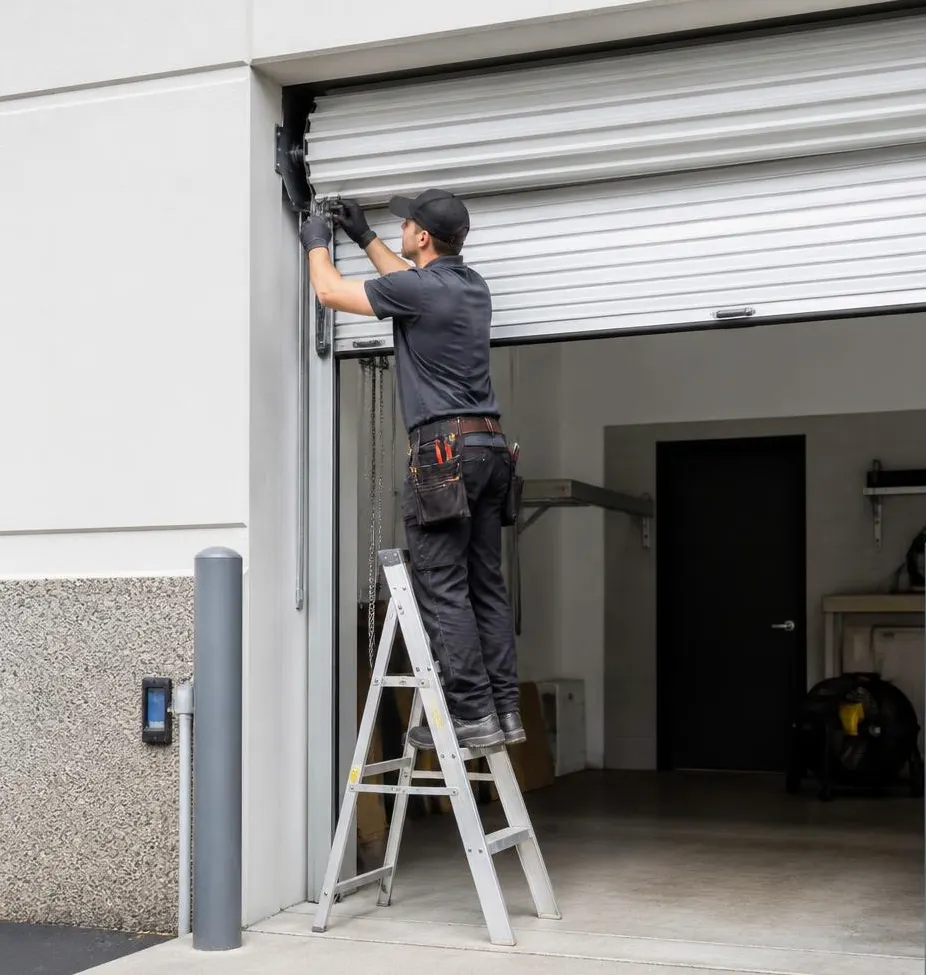
If you checked off two or more items above, especially rust combined with an unbalanced door or a straining opener, stop operating the door and call us before it fails completely. A spring that snaps under tension can bend the track, damage the opener, or injure someone standing nearby. Our technicians handle Garage Door Spring Repair for both torsion and extension systems, matching the new spring's wire size and wind rating to your door's weight and local wind-load requirements. We also offer Garage Door Tune-Up & Maintenance visits that catch coil gaps, rust, and cable wear early, before an afternoon downpour or a storm-season wind gust turns a wearing spring into a broken one.
If your garage door in Montverde, Clermont, Minneola, Groveland, Winter Garden, Windermere, Oakland, or Ferndale is showing any of these signs, call Precision Garage Door of Montverde today and get it inspected before it snaps.